• Careers
  • Contact
  • Forms

Search

Murray River Performing Group (MRPG)

This collection documents the history and development of the Murray River Performing Group (MRPG) and its associated activities (including the early Flying Fruit Fly Circus) between 1979 and 1996.

This collection documents the history and development of the Murray River Performing Group (MRPG) and its associated activities (including the early Flying Fruit Fly Circus) between 1979 and 1996.

The Murray River Performing Group was a professional community theatre group that performed productions dealing with local themes and issues. It was established in 1979 as a community initiative driven by Robert Perrier, Lloyd Suttor and Mark Shirrefs to develop a cultural scene in the Albury-Wodonga region at a time when Albury-Wodonga was a focus for the federal government’s decentralization policy.

The group also began a circus program to engage local children which went on to become the Flying Fruit Fly Circus. By 1995 the Murray River Performing Group experienced a drop in audience numbers, and in 1996 it was given notice that government funding would be pulled from the organization. Relaunching as HotHouse Theatre in 1997, the Company moved from their premises on Olive Street in Albury to their current home on Gateway Island.

The collection comprises photographs, negatives, slides, t-shirts, news articles, advertisements, reports, audio-visual recordings, press releases, posters, flyers, programs, correspondence, cards, scrapbooks, tickets, and newsletters.
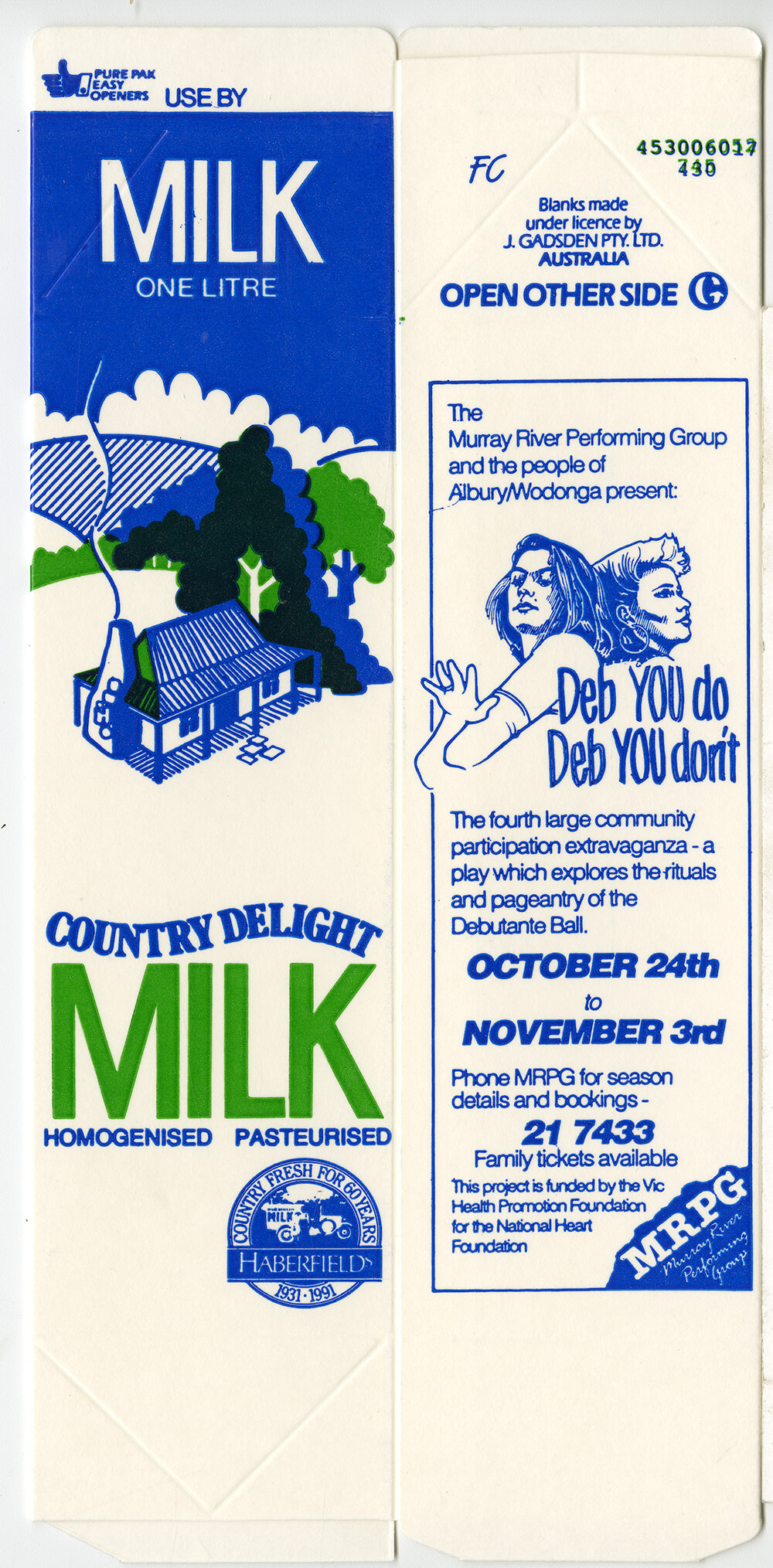
A flattened Country Delight milk carton advertising the MRPG performance of 'Deb you do, Deb you don't'. ARM 16.500.17
Advertisement leaflet for the HotHouse Theatre. ARM 16.500.13
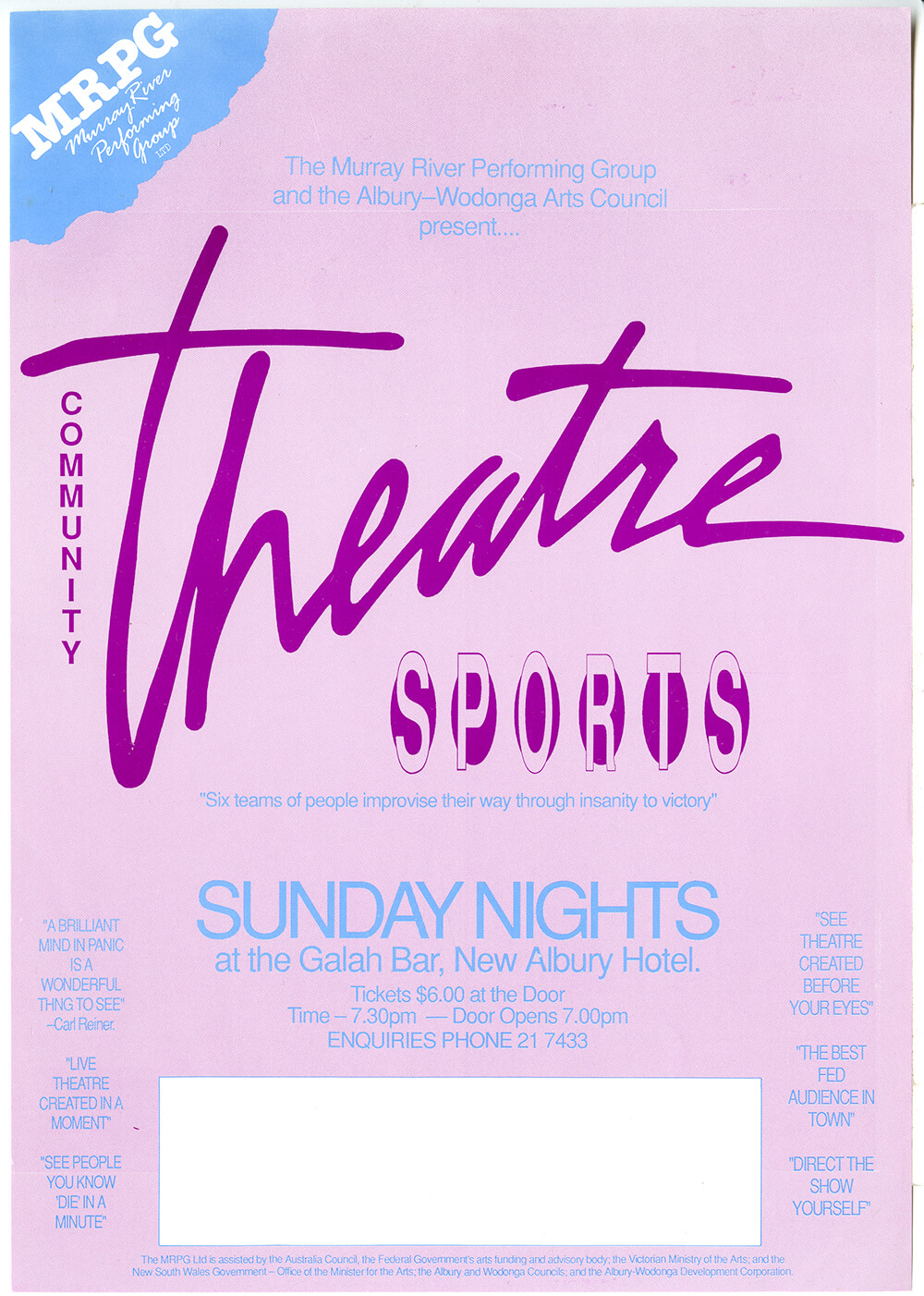
A poster advertising the Murray River Performance Groups performance of
A poster advertising the Murray River Performance Groups performance of "Community Theatre Sports". ARM 16.500.50.
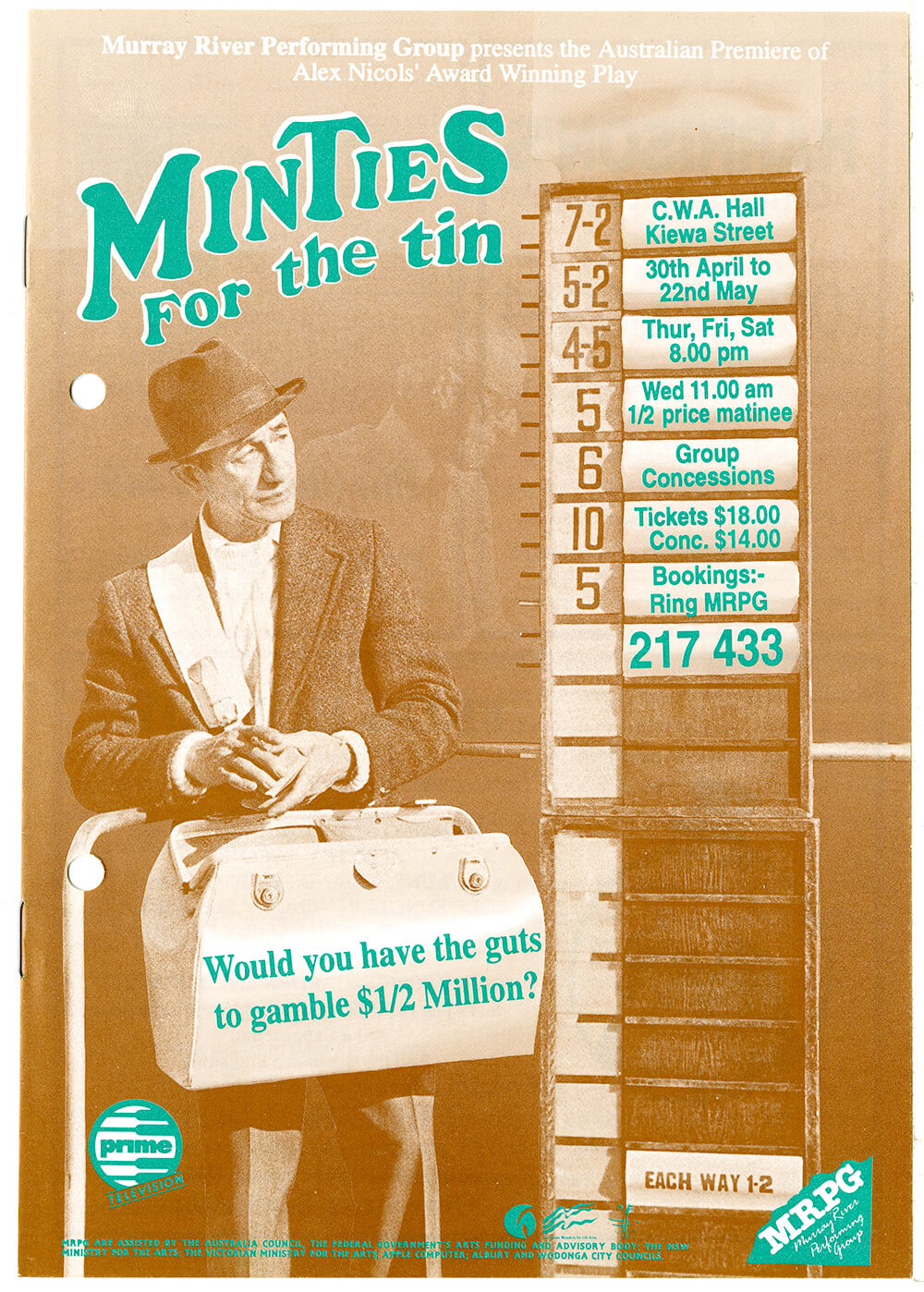
Program for
Program for "Minties for the Tin" by Murray River Performance Group. ARM 16.500.34

McPherson Studios

Albury's McPherson's Studios specialised in weddings, portraiture, child studies and commercial photography. Established by Duncan McPherson (1884-1952) in the 1930s, the studios operated in Anzac House, 611 Dean Street, Albury.

Harmony in the Home

In 1940, Albury’s 2AY radio station produced a recipe book of “very excellent recipes” sent in by members of the Harmony in the Home Club. The years of World War II had been challenging, but Jean Cleary, Helen Burnett and others from the club hoped that proceeds from the sale of the book would “bring Christmas cheer to many folk, young and old, in hospitals and orphanages” and that the year ahead would bring unexpected joys, fulfilled wishes and peace to all.

Dunstan

The Dunstan Collection consists of equipment and archives relating to the operation of the Federal Bakery in Howlong from 1914 to the 1970s. It contains over 200 items, including a bakery cart (currently on display in Crossing Place), flour bags and bakery equipment such as cake tins, pie moulds, cutters, rolling pins, a bun prover, and mixing bowls.

Abikhair Emporium

This collection celebrates Albury's own version of the 1950s beauty myth. Stylised 1950s women promote toiletries, women's garments even vacuum cleaners! This stunning marketing material demonstrates the context of the 1950s woman and the society they lived in.

Drivetrain Systems International (DSI)

The DSI Collection consists of a broad range of material relating to the former gearbox factory, covering its history as Borg-Warner, BTR Automotive, ION Ltd, DSI and Geely Automotive Holdings. It includes the last gearbox made at the factory as well as photographs, uniforms, equipment, memorabilia, company records, promotional videos, DVDs and ephemera.

National Growth Centre

The Albury-Wodonga National Growth Centre project was a big, bold and brave decentralisation initiative that focused the nation's attention on Albury-Wodonga like never before. In many ways the Growth Centre was Albury-Wodonga's 'moment of fame'. It was marketed nationally, and while it flourished it attracted extensive metropolitan media scrutiny.
OUR
ACKNOWLEDGMENT

AlburyCity acknowledges the Wiradjuri people as the traditional custodians of the land in which we live and work and we pay our respects to Elders past, present and future for they hold the memories, culture, tradition and hopes of Aboriginal and Torres Strait Islander people that contribute to our community.