Water Quality
Albury’s drinking water comes from the Murray River and goes through a carefully managed treatment process to make sure it’s clean, safe, and great tasting before it reaches your tap.

How water is treated
Albury’s drinking water comes from the Murray River and goes through a carefully managed treatment process to make sure it’s clean, safe, and great tasting before it reaches your tap.
Our Water Treatment Plant uses advanced technology and strict quality controls to meet the Australian Drinking Water Guidelines.
1. Water intake
Raw water is drawn from the Murray River through screened intakes that remove large debris such as leaves and sticks.
2. Coagulation and flocculation
A coagulant (usually alum) is added to the water. This helps fine particles, dirt, and organic matter bind together into larger flocs that are easier to remove.
3. Dissolved air flotation (DAF)
Tiny air bubbles attach to the flocs and lift them to the surface, where they form a layer of sludge that is skimmed off. This process is highly effective for removing light particles and algae commonly found in river water.
4. Filtration
The clarified water passes through filters made of anthracite, garnet, and other materials. These filters trap any remaining fine particles and microorganisms.
Filters are regularly backwashed using clean water and air to remove trapped material. The backwash water is then safely treated before disposal.
5. Disinfection
Chlorine is added to destroy any remaining bacteria, viruses, or pathogens, ensuring the water is microbiologically safe.
6. pH correction
Lime is added to adjust pH levels, helping to protect pipes and improve taste.
7. Fluoridation
A small amount of fluoride, in the form of sodium silica fluoride (Na2SiF6), is added to help prevent tooth decay, in accordance with NSW Health guidelines.
8. Powder activated carbon
Powder activated carbon is added intermittently to assist with manganese removal, taste and odour issues, and algae toxins in the raw water.
9. Storage and distribution
Treated water is stored in secure reservoirs before being pumped through a network of pipes to homes, schools, and businesses across Albury.
Ongoing quality monitoring
All stages of the water treatment process — including chemical dosing, filtration, and water quality testing — are closely monitored to ensure drinking water meets the highest standards.
Automated systems track water quality in real time. If results fall outside strict limits, operations can automatically adjust or shut down to protect the water supply.
Water quality monitoring and compliance
AlburyCity and NSW Health work together to ensure drinking water consistently meets the Australian Drinking Water Guidelines.
NSW Health compliance sampling
NSW Health oversees an independent monitoring program. Samples are taken throughout the system — from the treatment plant to reservoirs and customer taps — and tested for microbiological, chemical, and physical parameters.
AlburyCity’s additional risk-based sampling
AlburyCity conducts extra monitoring during high river flows, after maintenance work, or in areas more susceptible to water quality changes.
These checks allow potential issues to be identified and addressed quickly.
Operational monitoring by our treatment team
AlburyCity’s Water Treatment Team continuously monitors plant performance using automated sensors, on-site testing, and visual inspections.
What we monitor
- Turbidity (water clarity)
- pH levels
- Chlorine concentration
- Flow rates and pressure
- Filter performance (including backwash cycles)
Results are reviewed in real time, allowing operators to respond quickly to changes such as heavy rainfall or river water quality variations.
Why it matters
Operational monitoring helps maintain consistent, high-quality drinking water and prevents issues before they affect supply.
PFAS reporting
What are PFAS?
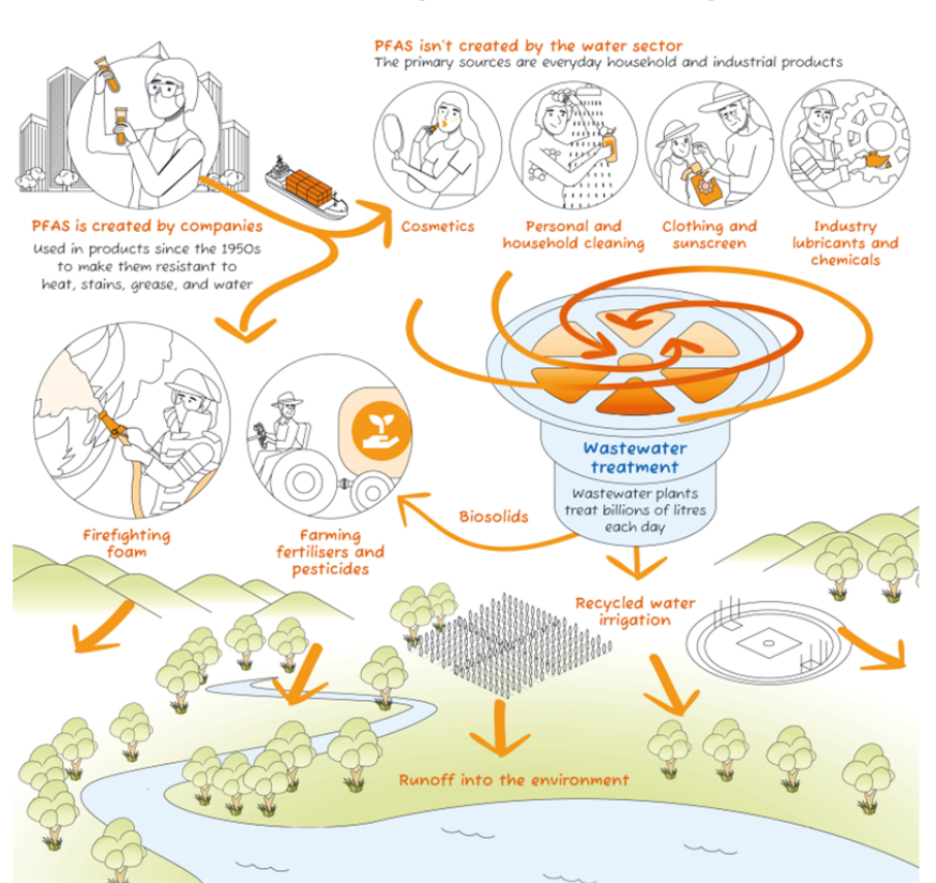
PFAS are manufactured chemicals used since the 1950s in products such as non-stick cookware, firefighting foams, and water-repellent fabrics. They are sometimes called “forever chemicals” because they do not easily break down and can build up over time in the environment.
As a result of their widespread use, low levels of PFAS have been detected in surface and groundwater worldwide.
The Australian Drinking Water Guidelines include health-based guideline values for PFAS chemicals, indicating levels that can be consumed over a lifetime without increased health risk.
How is AlburyCity responding?
AlburyCity participated in the NSW Health PFAS screening program. Results show PFAS levels in Albury’s drinking water are below guideline values and detection limits.
NSW Health arranged PFAS test results
| PFAS chemical(s) | Proposed ADWG guideline | Test date | Maximum result | Complies with current guideline | Complies with proposed guideline |
|---|---|---|---|---|---|
| PFOA | 200 ng/L | 10 Dec 2024 | < 1.0 ng/L | Yes | Yes |
| Sum of PFOS and PFHxS | No guideline value set | 10 Dec 2024 | Not tested | Yes | No value set |
| PFHxS | 30 ng/L | 10 Dec 2024 | < 1.0 ng/L | No value set | Yes |
| PFBS | 1000 ng/L | 10 Dec 2024 | < 1.0 ng/L | Yes | Yes |
* Australian Drinking Water Guidelines (2011)
** “Less than” indicates the test cannot measure below this value.
How PFAS makes its way into the water cycle
You can also visit the Australian Government PFAS Advice page to find who to contact about the most current advice in your location.