The Bee Hotel
Let's take a closer look at Nature's Pollinators.

Hidden among the garden beds of the Albury Botanic Gardens is a small structure with an important purpose — the Bee Hotel. While it may look decorative at first glance, this carefully designed feature provides vital nesting habitat for Australia’s solitary native bees, many of which are under pressure from habitat loss and climate change and pesticide use.
Unlike social bees that live in hives, solitary bees nest alone. Each female builds and provisions her own nest, often in narrow hollows, pithy stems, or soil. These gentle insects are important pollinators of native plants and garden flowers.
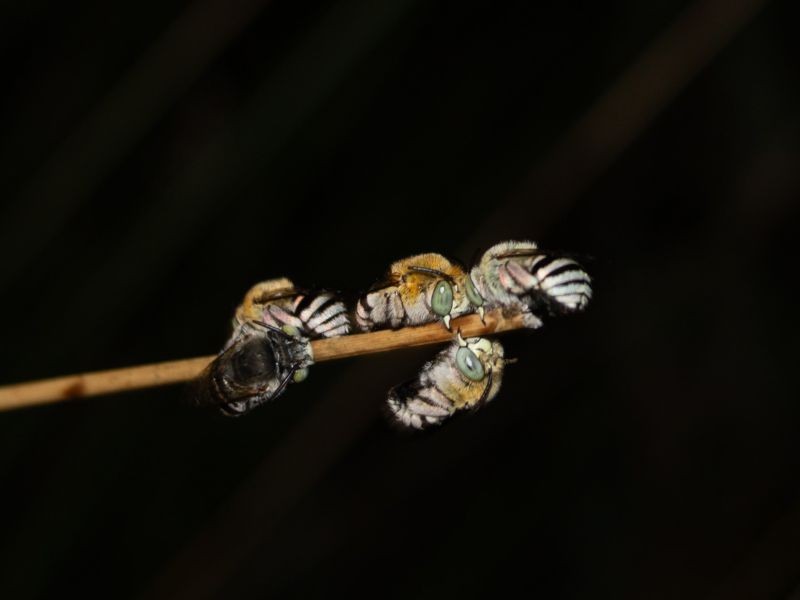
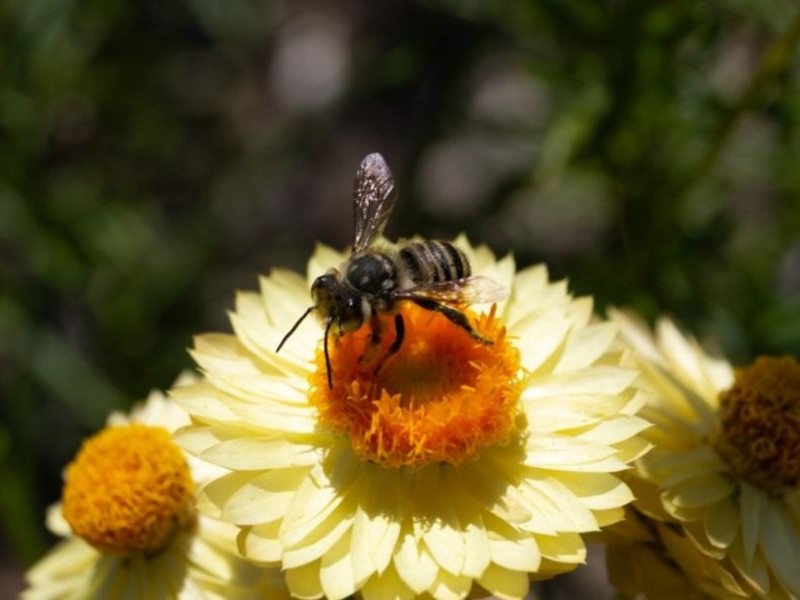
Design Inspired by Nature
The Bee Hotel was designed as a sculptural feature that integrates habitat into the landscape. Its modular compartments use simple geometric forms to create varied nesting spaces, reflecting the organised yet diverse nature of bee habitats. Natural materials are arranged to support different species, offering a range of secure, sheltered spaces suited to the nesting habits of local solitary bees.
Inside, a combination of natural materials creates a range of nesting options:
- Bamboo canes and pithy stems, which mimic hollow plant stalks
- Native hardwood, which provides smooth, sheltered cavities
- Mudbrick, for species that nest in compacted earth
These materials were selected to match the preferences of different bee species and are arranged in small modules to reflect natural nesting habits.
The Bee Hotel sits alongside the Elm Avenue’s perennial garden beds, creating a valuable link between foraging and nesting habitat. Together, diverse flowering plants and a custom-built refuge support pollinator activity across the seasons.
Why It Matters
Australia is home to more than 1,700 native bee species, but many face challenges due to habitat loss, land clearing and lack of nesting resources in urban areas. Projects like this Bee Hotel highlight how public gardens and home landscapes can help reverse this trend.
Beyond providing habitat, the Bee Hotel also offers a chance for visitors to learn more about these fascinating and often overlooked insects. It encourages observation and appreciation for the ecological roles of even the smallest creatures.
Bees are most active during the warmer months, so keep an eye out for nesting activity in spring and summer.
The design was developed by GbLA Landscape Architects, with advice from Clancy Lester, founder of @beesandblossoms.aus.